
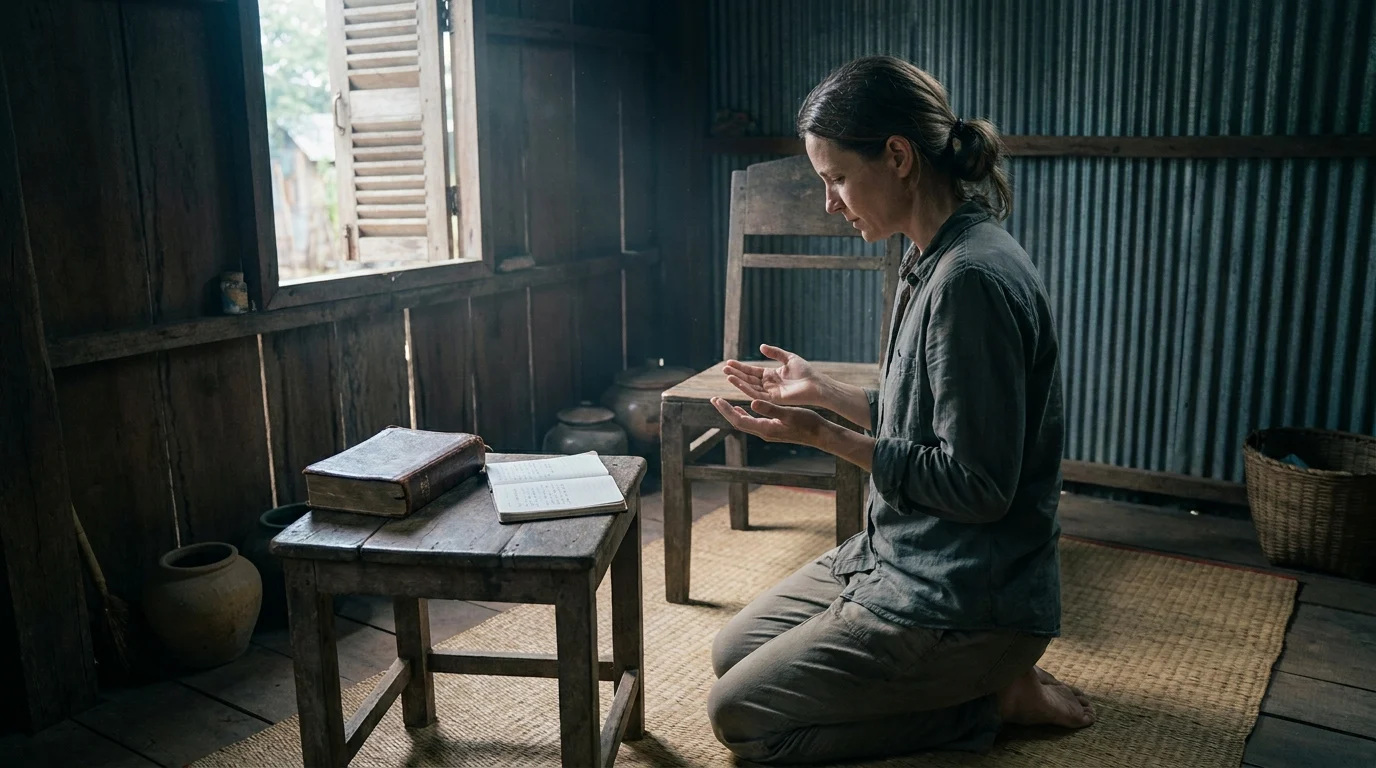
You bring your list to God every morning: heal this, provide that, change him, fix her. There is nothing wrong with asking. But somewhere between waking and praying, most believers skip a step Paul never skipped. Writing from a prison cell, he gave the church at Philippi a pattern for approaching God that still corrects our devotional habits today. Paul did not tell them to stop asking. He told them how to ask, with thanksgiving first. That order changes how prayer feels and what it does inside you. Gratitude in devotion is not a mood you wait to feel. It is a discipline you choose before you speak a single request.
The Pattern in Philippians 4: Thanksgiving Before Petition
A Command Written from a Prison Cell
Paul wrote these words in chains, not comfort. “Be anxious for nothing, but in everything by prayer and supplication, with thanksgiving, let your requests be made known to God” (Philippians 4:6, NKJV). Read that sentence slowly. Paul does not say pray first, then give thanks once the answer arrives. He builds thanksgiving into the request itself.
Thanksgiving Placed Before the Request
Look at the order of the verse. Prayer, supplication, thanksgiving, then requests. Paul places gratitude inside the structure of the prayer, not as a closing formality but as the doorway a believer walks through before asking for anything.
This was not accidental phrasing from a comfortable man. Paul wrote from a Roman prison, uncertain whether he would live or die for the gospel (Philippians 1:20-21). He had every reason to lead with complaint. Instead, his instruction to others reflects what he practised himself: thanksgiving comes first, and requests follow after.
The Peace That Guards a Grateful Heart
Paul does not end at verse 6. He continues, “and the peace of God, which surpasses all understanding, will guard your hearts and minds through Christ Jesus” (Philippians 4:7, NKJV). That peace guards those who prayed in the order he described. Gratitude in devotion is what opens the door that anxious asking alone cannot open.
Why Reordering Your Approach Changes Your Heart
Where you start your prayer decides where your heart lands. Start with lack, and your mind fills with what is missing. Start with thanksgiving, and your mind fills with what God has already done.
From Scarcity to Sufficiency
A believer who opens devotion with need alone rehearses lack before God even hears the need. The empty rice sack gets named before the God who has filled it a hundred times before. Gratitude reverses this. It names what has already been supplied, and only then brings what is still needed.
This is not pretending the need does not exist. It is refusing to let the need speak first.
Trust Grows Where Complaint Used to Live
A heart that leads with thanksgiving is training itself to trust. Every remembered mercy becomes evidence for the request that follows. You are not asking a stranger for help. You are asking the One who fed you yesterday, healed your child last season, kept your family through the flood.
Gratitude in devotion builds this evidence into your prayer before you ask for anything new. Your requests stop sounding like arguments to convince a reluctant God, and start sounding like conversation with a Father you already know is good.
The Heart Shapes Before the Words Do
By the time your requests arrive, your heart has already changed shape. Anxiety softens. Perspective widens. You are no longer approaching God as someone owed an answer, but as a child who already knows the Father’s hand.
This is the quiet work thanksgiving does before a single petition is spoken.
Practical Steps to Lead Your Devotional Time with Gratitude
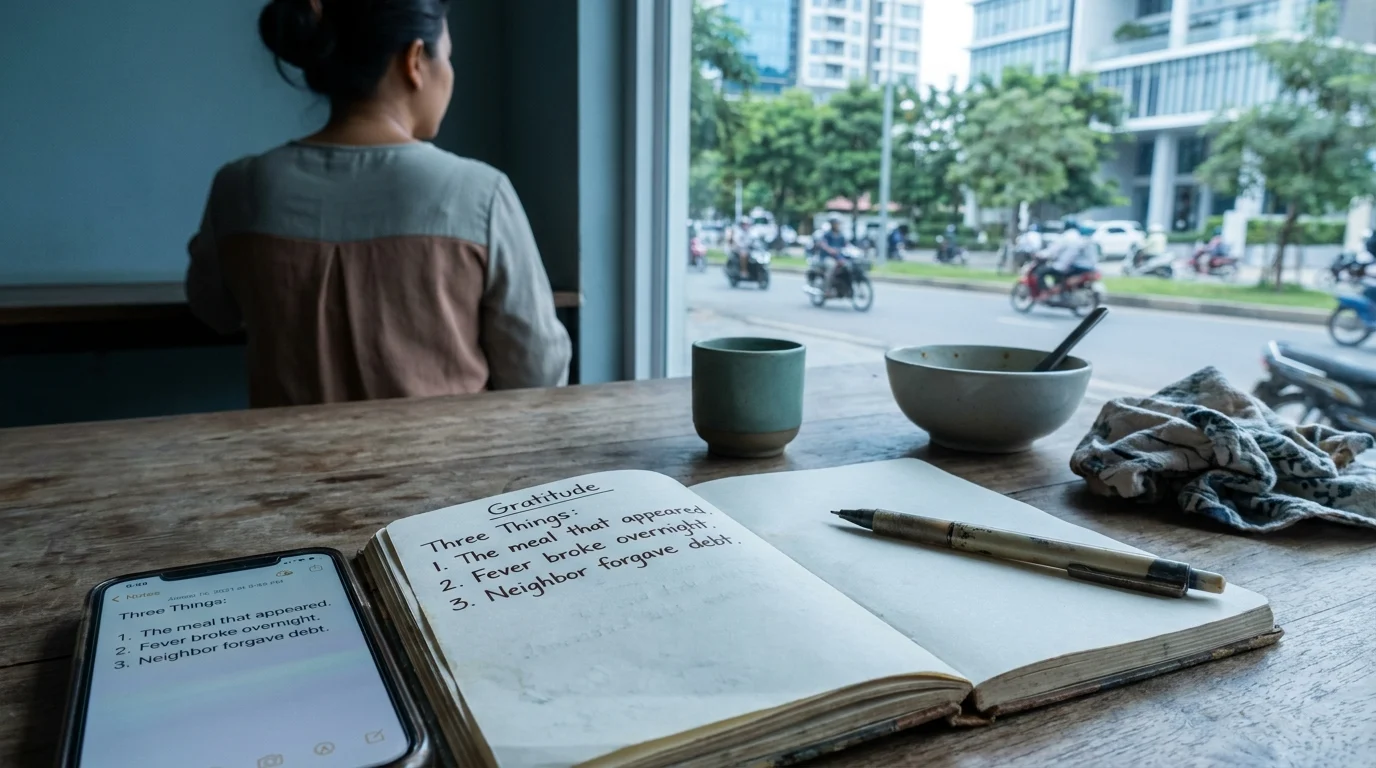
Knowing the pattern is not the same as living it. You need small, repeatable habits that put thanksgiving first before your mind drifts back to what is missing.
Write Three Things Before You Ask for One
Keep a small notebook or a page in your phone. Before you bring any request to God, write three specific things He has already done. Not vague thanks, but names, dates, and details: the meal that appeared when the money did not, the fever that broke overnight, the neighbour who forgave a debt. Specific gratitude in devotion trains your memory to work for your faith instead of against it.
Speak Your Thanks Out Loud First
Silence lets the mind wander to worry. Speaking thanks aloud, even quietly, forces your attention onto what is true rather than what is feared. Start every prayer time with a spoken sentence: “Father, thank You for…” Finish it fully before you move to a single petition.
Use a Simple Prompt When You Feel Stuck
Some mornings gratitude does not come easily. When it does not, ask three plain questions: What did I eat yesterday? Who did I speak to? What did I wake up able to do? Each answer is a mercy you almost missed. Thank God for it before you ask Him for anything new.
Guard the Order, Not Just the Words
The habit is not thanksgiving alone. It is thanksgiving first. If a request slips out early, stop, and return to gratitude before continuing. The order is the discipline.
Conclusion
Philippians 4 gives a pattern, not a suggestion. Thanksgiving comes before the request, every time. This is not a formula that forces God’s hand. It is a posture that reshapes yours.
Start tomorrow’s devotion differently. Before you ask for the harvest, thank Him for the seed already planted. Before you ask for healing, thank Him for the breath still in your lungs. Let gratitude in devotion lead, and watch how differently your requests begin to sound.
There is more to read at Unbounded Knowledge. Come back often.
If you have questions about Christ, or you want to talk about your own faith journey, reach out to Naleng Real at nalengreal.com. She will be glad to hear from you.
I work with Cambodian and international Christian organizations, churches and Christian leaders to end gospel poverty, reaching the people at the marketplace through a holistic ministry approach.
Every article by Naleng →