
Following Jesus sounds simple. Believe, and be saved. But Jesus Himself spoke words which stop many people in their tracks.
“If anyone desires to come after Me, let him deny himself, and take up his cross daily, and follow Me.” : Luke 9:23, NKJV
This word daily carries weight. Discipleship requires more than a single decision. This path marks a direction you choose every morning. You choose to submit your will to the Lordship of Christ. For those curious about how this connects to salvation, you might read about Lordship Salvation: Jesus as Savior and King.
What Is Discipleship?
The word “disciple” comes from the Latin discipulus, meaning a learner or student. In the ancient world, a disciple did not simply attend lectures. He followed a teacher closely, watched how the teacher lived, and shaped his own life around what he learned.
When Jesus called His disciples, He did not hand them a scroll and say, “Read this and report back.” He said, “Follow Me.” This command meant leaving things behind. The journey meant going where He went, learning what He taught, and becoming what He was forming them to be.
Discipleship is the ongoing process of becoming more like Jesus Christ through obedience, learning, and surrender.
This differs from church attendance. You might sit in a church building every week and never grow as a disciple. Discipleship requires active engagement: studying Scripture, obeying what God says, loving others, and giving up everything which competes with the place of Christ in your life.
Why Jesus Said to Count the Cost
In Luke 14, Jesus spoke plainly to the crowds who were following Him. He did not soften His message to make acceptance easier.
“And whoever does not bear his cross and come after Me is unable to be My disciple. For which of you, intending to build a tower, does not sit down first and count the cost, whether he has enough to finish the task?” : Luke 14:27-28, NKJV
He continued:
“So likewise, whoever of you does not forsake all he has is unable to be My disciple.” : Luke 14:33, NKJV
Jesus used two illustrations: a man building a tower, and a king preparing for war. In both cases, the lesson remains consistent. Before you begin, think honestly about the requirements.
He was not trying to discourage people from following Him. He was protecting them from a shallow commitment which collapses under pressure. A half-built tower is worse than no tower at all. A soldier who runs when the battle begins causes more damage than one who never enlisted.
Jesus wants followers who have thought clearly about the path ahead.
A Picture From Daily Life
Consider a young man growing up in rural Cambodia, working the rice fields with his family. His father, his grandfather, and his uncles have all worked the same land. The work is familiar. The rhythms are known.
One day, a master craftsman comes to the village. He is looking for an apprentice, someone willing to learn a trade. The young man feels something stir in him. He wants to learn.

But to accept the offer, he must leave the field. He must leave the security of what he knows. He will no longer set his own hours or follow the family routine. He will submit to the master’s schedule, the master’s methods, and the master’s correction. There will be days when the work is hard and the learning is slow. There will be moments when he misses the simplicity of the rice field.
But if he stays, he grows. If he stays, he becomes something he could not have become on his own.
This provides a picture of discipleship. Jesus is the Master. He calls you to leave behind the comfortable, the familiar, and the self-directed life. He asks you to follow Him closely, submit to His teaching, and trust the work He is forming in you is worth the cost.
The young man who stays in the field never suffers the discomfort of learning. He also never gains the skill of a craftsman.
The Great Commission: Disciples Who Make Disciples
The call to discipleship does not end with your own growth. Jesus made this clear at the end of His ministry on earth.
“Go therefore and make disciples of all the nations, baptizing them in the name of the Father and of the Son and of the Holy Spirit, teaching them to observe everything I commanded you. And lo, I am with you always, even to the end of the age.” : Matthew 28:19-20, NKJV
Notice what Jesus commanded. He did not say, “Go and make converts.” He said, “Make disciples.” There is a difference. To understand your role in this mission, explore The Great Commission: Your Marching Orders from Jesus.
A convert makes a decision. A disciple changes a life.
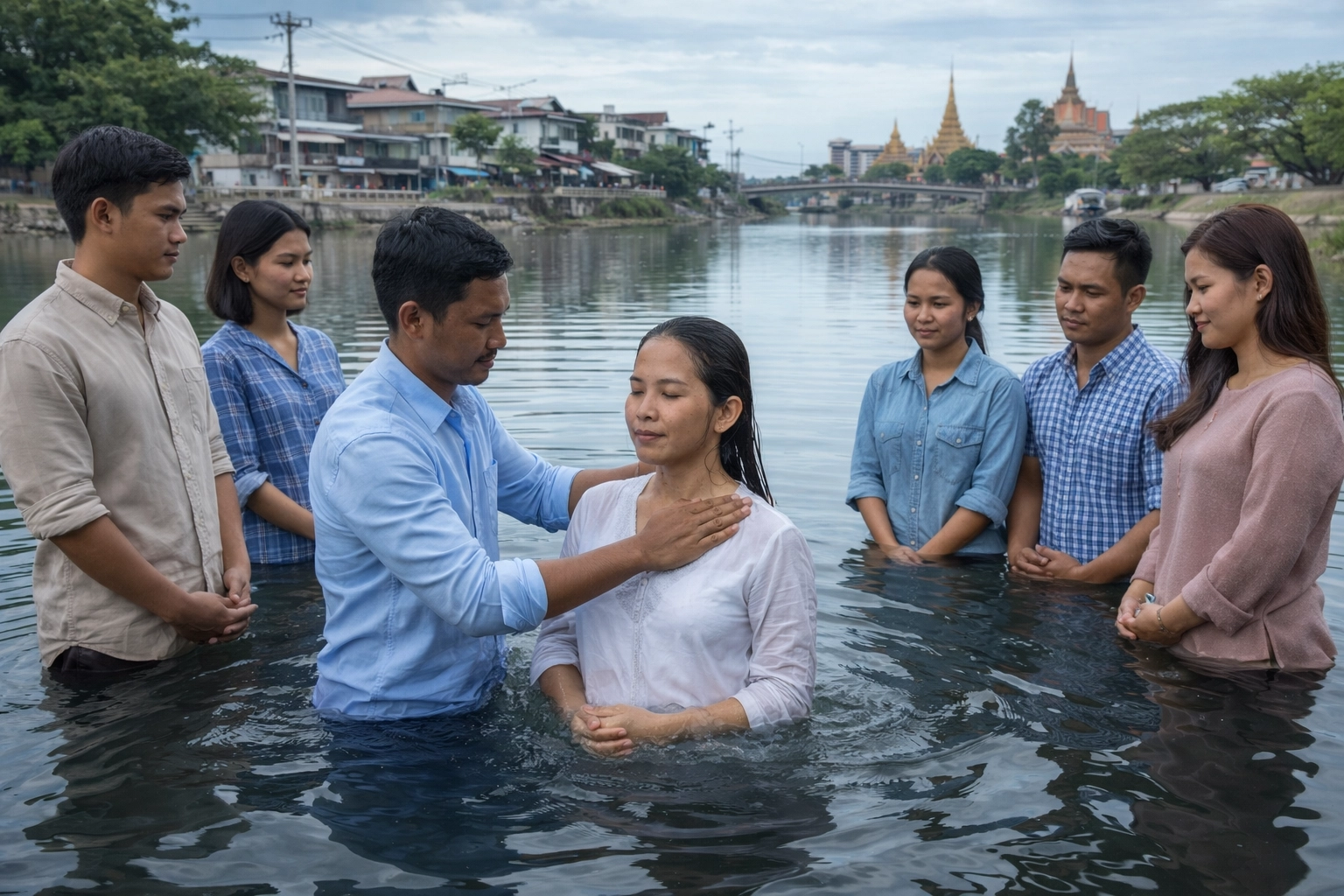
The process Jesus described involves three actions: going, baptizing, and teaching. All three matter. You go to where people are. You baptize them as a public declaration of their faith. You can learn more about this step in Baptism: The Believer’s Public Witness. Then you teach them to obey everything Christ commanded.
The final part is where many churches stop short. We welcome people in. We celebrate their decision. But then we leave them without the ongoing teaching, accountability, and community needed for growth. The Great Commission is not finished at the moment of salvation. The work continues until the disciple is equipped to make disciples of their own.
A.W. Tozer wrote:
“What comes into our minds when we think about God is the most important thing about us.”
A disciple spends a lifetime learning to think rightly about God, and such thinking changes everything about how they live.
Truth Which Sets You Free
Then Jesus said to those Jews who believed Him:
“If you abide in My word, you are My disciples indeed. And you shall know the truth, and the truth shall make you free.” : John 8:31-32, NKJV
Jesus connected discipleship directly to freedom. Not freedom to do whatever you want. Freedom from the things which hold you captive: sin, fear, shame, confusion, and the approval of others.
This freedom comes through abiding. This word means staying, remaining, continuing. The process is not a one-time reading of Scripture. This way of life is built on returning to God’s Word again and again, letting the truth shape your thinking, your choices, and your identity.
Many people look for freedom in money, in achievement, or in relationships. Jesus said freedom comes from knowing the truth, and knowing the truth comes from staying in His Word.
Dietrich Bonhoeffer, the German pastor who was executed for standing against Hitler, understood this deeply. He wrote:
“Cheap grace is the grace we bestow on ourselves. Costly grace is the gospel which must be sought again and again.”
Bonhoeffer paid for his discipleship with his life. He had counted the cost, and he found Christ worth every part of his sacrifice.
What the Church Fathers Knew
The call to costly discipleship is not new. This has been the message of faithful Christians across every century.
Charles Spurgeon, the great Victorian preacher, put the matter plainly:
“Visit many good books, but live in the Bible.”
He understood discipleship is not complicated. The practice is simply the daily, serious, unhurried act of staying in God’s Word and letting the truth change you.
John Wesley, the founder of Methodism, gave his whole life to making disciples. He rode thousands of kilometers on horseback to preach, teach, and form small groups where believers could grow together. He said:
“Do all the good possible, by all the means possible, in all the ways possible, in all the places possible, at all the times possible, to all the people possible, as long as ever possible.”
Wesley saw discipleship as something which overflows. The disciple who is growing is unable to help but invest in others.
These were not perfect men. But they were men who had counted the cost and decided following Christ was worth everything the Master asked of them.
Live the Call Today
Discipleship is not a concept to admire. The practice is meant to begin. Here are three steps to take today.
Spend Time in God’s Word Every Day
Jesus said His disciples abide in His Word. This means regular, consistent time reading Scripture. Start with the Gospel of Luke if you are new to the Bible. Read one chapter each morning. Ask God to show you one thing He wants you to understand or obey. Do not rush. Abiding is slow and steady, not fast and scattered.
Identify One Thing You Need to Surrender
Jesus said the disciple must deny himself. Think honestly: what is one thing in your life which competes with Christ’s place? This might be a habit, a relationship, an ambition, or a fear. Name this area. Bring the concern to God in prayer. Ask Him for the strength to release the burden. Surrender is not a one-time act. The process is a daily practice. This includes Forgiveness: Letting Go of What God Has Already Released.
Find One Person to Walk With
Discipleship was never meant to be solitary. Jesus sent His disciples out in pairs. He built a community around Himself. Find one trusted believer, a friend, a pastor, someone from your church, and commit to meeting regularly. Study Scripture together. Ask each other hard questions. Pray together. You will grow faster together than alone.
The Cost Is Real. So Is the Reward.
Jesus did not promise following Him would be comfortable. He promised the journey would be worth the cost.
Every disciple who has walked this path before you has discovered the same thing: the cost is real, but so is the freedom, the purpose, and the joy which come from a life fully surrendered to Christ.
You were not made for a half-committed faith. You were made to know Him, follow Him, and become more like Him every day.
Count the cost. Then take the first step.
If you want to talk about what it means to follow Jesus or you have questions about faith and discipleship, reach out to Naleng Real at https://nalengreal.com. She would be glad to walk with you. You can find more resources and encouragement at our blog.
I work with Cambodian and international Christian organizations, churches and Christian leaders to end gospel poverty, reaching the people at the marketplace through a holistic ministry approach.
Every article by Naleng →