

You finished the chapter. You checked the box. But can you tell someone what it actually said?
Many believers in Cambodia read the Bible the same way they might sprint through a stack of homework: fast, dutiful, and eager to reach the end. A daily reading plan promises spiritual growth, yet finishing a chapter can quietly replace knowing God. Slow Bible reading asks a different question. Not “did you finish?” but “did you meet Him?” That question changes everything about how you open Scripture each morning.
The Hidden Cost of Checklist Bible Reading
Rushing through Scripture feels productive. You cross off a chapter, close your Bible, and move on with your day. But speed has a cost, and it shows up in what you cannot remember an hour later.
Retention Fades Fast
Reading quickly moves words past your eyes without letting them settle in your heart. Ask yourself what you read yesterday. If the answer is vague, the reading did little more than pass time.
Meaning Gets Buried
Scripture rewards attention. A single verse can carry weight that takes minutes, not seconds, to notice. When you skim past a phrase like “be still” in Psalm 46:10, you miss the very command it gives you. Rushing to finish the chapter means rushing past the point of the chapter.
Productivity Is Not the Same as Transformation
Finishing a reading plan can feel like spiritual success. Your chart is full. Your streak is unbroken. But Paul warned that knowledge without love or application “puffs up” (1 Corinthians 8:1). A completed checklist can mask a heart that never changed.
This is the quiet danger of checklist reading. You can feel accomplished while remaining exactly the same person you were before you opened the Bible. The goal was never to finish. The goal was to be changed by what you read.
What Slow Bible Reading Actually Looks Like
Slow Bible reading does not mean reading less of the Bible. It means reading the same words with more of your attention. Instead of moving forward, you stay put until a verse speaks.
Lectio Divina: Reading in Four Movements
Christians have practised a method called lectio divina for centuries. It has four simple steps: read the passage slowly, meditate on a phrase that stands out, pray about what God is showing you, and rest quietly in His presence. Each step takes minutes, not seconds.
Reading the Same Verse Twice, or Ten Times
Fast reading treats repetition as wasted time. Slow reading treats it as the point. Reading a verse ten times is not a failure to move on. It is how a truth stops being information and starts becoming conviction.
Pausing on a Single Word
Jesus said, “Abide in Me, and I in you” (John 15:4). A fast reader passes over “abide” in half a second. A slow reader stops there and asks what it means to remain, to stay, to not wander off. That one word can hold an entire devotional’s worth of meaning.
This is the difference. Speed treats Scripture like information to collect. Slowness treats it like a Person to sit with.
Building a Daily Devotional Rhythm Around Slow Bible Reading
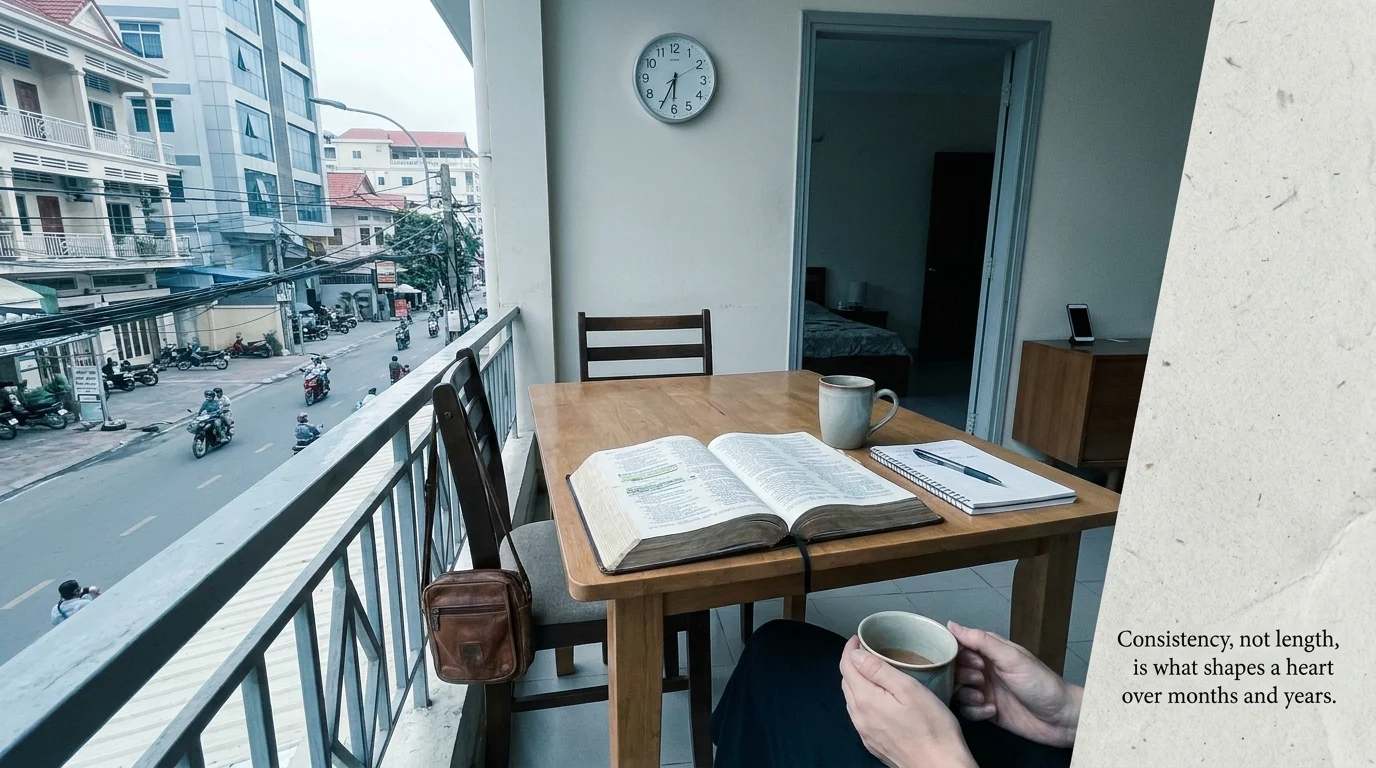
A daily devotional rhythm does not require an extra hour in your day. It requires fifteen quiet minutes, kept in the same place at the same time, until they become as natural as breakfast. Consistency, not length, is what shapes a heart over months and years.
Choose One Small Passage
Pick a single verse, or five, rather than a full chapter. Read a Psalm before you walk to the market, or a few lines from a Gospel before the household wakes. A small passage gives you room to notice instead of racing to cover ground.
Sit in Silence Before You Read
Set your phone in another room. Let your breathing slow and your thoughts settle for half a minute before your eyes touch the page. Silence is not wasted time. It clears space in your mind so the words that follow can land.
Journal What You Notice
Keep a plain notebook beside your Bible. Write down the phrase or word that stopped you, and a sentence or two about what it means for the day ahead. Write an honest, simple response to God.
Let Prayer Close the Time
After you read and write, speak to God about what you found. Ask Him for help to live it out before evening comes. Then sit quietly for another moment, the way you would linger after a close friend finishes speaking.
Each part of this rhythm slows you further than the one before it. Silence prepares your heart. A small passage focuses your attention. Journaling deepens what you have read. Prayer carries it into your day. Practised daily, slow Bible reading stops being an occasional discipline and becomes the shape of your walk with God.
Conclusion
Checklist reading measures chapters. Slow Bible reading measures change. One counts what you have covered. The other asks whether God has spoken and whether you have listened.
You do not need to abandon reading through the Bible in a year. Bring the same attentiveness that silence, journaling, and prayer teach into whatever plan you already keep. Read fewer verses, if that is what it takes to hear them.
The Word of God was never meant to be finished like a task. It was meant to be lived, one slow verse at a time, until your life begins to look like what you have read.
There is more to read at Unbounded Knowledge. Come back often.
If you have questions about Christ, or you want to talk about your own faith journey, reach out to Naleng Real at nalengreal.com. She will be glad to hear from you.
I work with Cambodian and international Christian organizations, churches and Christian leaders to end gospel poverty, reaching the people at the marketplace through a holistic ministry approach.
Every article by Naleng →