

Picture a cow chewing its cud. Slow, patient, working the same mouthful over and over until every bit of nourishment is drawn out. That image sits closer to biblical meditation than any picture of silence and stillness you might imagine. Meditating on Scripture is not a Christian version of an Eastern practice with a different label stuck on top. It is something older, rooted in a Hebrew word King David used long before yoga mats or incense. David built his whole life on this practice, and Psalm 1 shows you exactly what it looked like. Understanding his pattern will change how you open your Bible tomorrow morning.
What Biblical Meditation Really Means
The Hebrew word behind biblical meditation is hagah. It means to mutter, growl, or ponder something so deeply that you speak it under your breath without noticing. Ancient Hebrew readers often meditated out loud, repeating a verse quietly until its words became part of how they thought. Psalm 1:2 says the blessed man’s delight “is in the law of the Lord, and in His law he meditates day and night.” That is hagah in action: turning Scripture over again and again until it settles into you.
Filling Versus Emptying
Eastern meditation, the kind many Western gyms and apps have borrowed, aims to empty the mind. The goal is a blank space, free of thought, free of words. Biblical meditation moves in the opposite direction entirely.
Meditating on Scripture fills the mind rather than clearing it. You are not trying to think about nothing. You are trying to think hard about one thing: God’s Word. Joshua 1:8 commands, “This Book of the Law shall not depart from your mouth, but you shall meditate in it day and night.” Notice the mouth is involved, not silenced.
A Practice, Not a Feeling
Hagah is active work. You chew on a verse, repeat it, ask what it means, and let it press against your circumstances. This is not a mystical state you drift into. It is closer to a farmer turning soil, slow and deliberate, until the seed of God’s Word can actually take root.
David’s Pattern in Psalm 1: Delight, Dwell, and Bear Fruit
Delight Before Duty
Psalm 1 opens with a contrast. The blessed man does not walk in the counsel of the ungodly, nor stand in the path of sinners, nor sit in the seat of the scornful (Psalm 1:1). Instead, he delights.
That word matters. David is not describing a man forcing himself through a religious chore. Meditating on Scripture, in this picture, flows from wanting to be there. Duty alone rarely produces a day and night pattern of returning to God’s Word. Delight does.
Planted, Not Wandering
Psalm 1:3 pictures this man as “a tree planted by the rivers of water.” Not a tree that wandered near water by chance, but one planted there on purpose, with roots that reach deep because they already know where the source is.
That is what steady meditation does. It plants you beside a constant supply instead of leaving you to chase whatever spiritual moisture happens to pass by. A tree planted by water does not panic during a dry season. Its roots reached down long before the drought came.
Fruit in Its Season
The same verse promises that this tree “brings forth its fruit in its season,” its leaf does not wither, and whatever it does prospers. Notice the timing: fruit in its season, not fruit on demand.
Meditation on God’s Word rarely produces results you can point to the next morning. It works the way roots work, quiet and underground, before anything visible appears above the soil. David’s pattern was a slow, deliberate feeding of the soul that eventually could not help but bear fruit.
Practicing Scripture Meditation Today
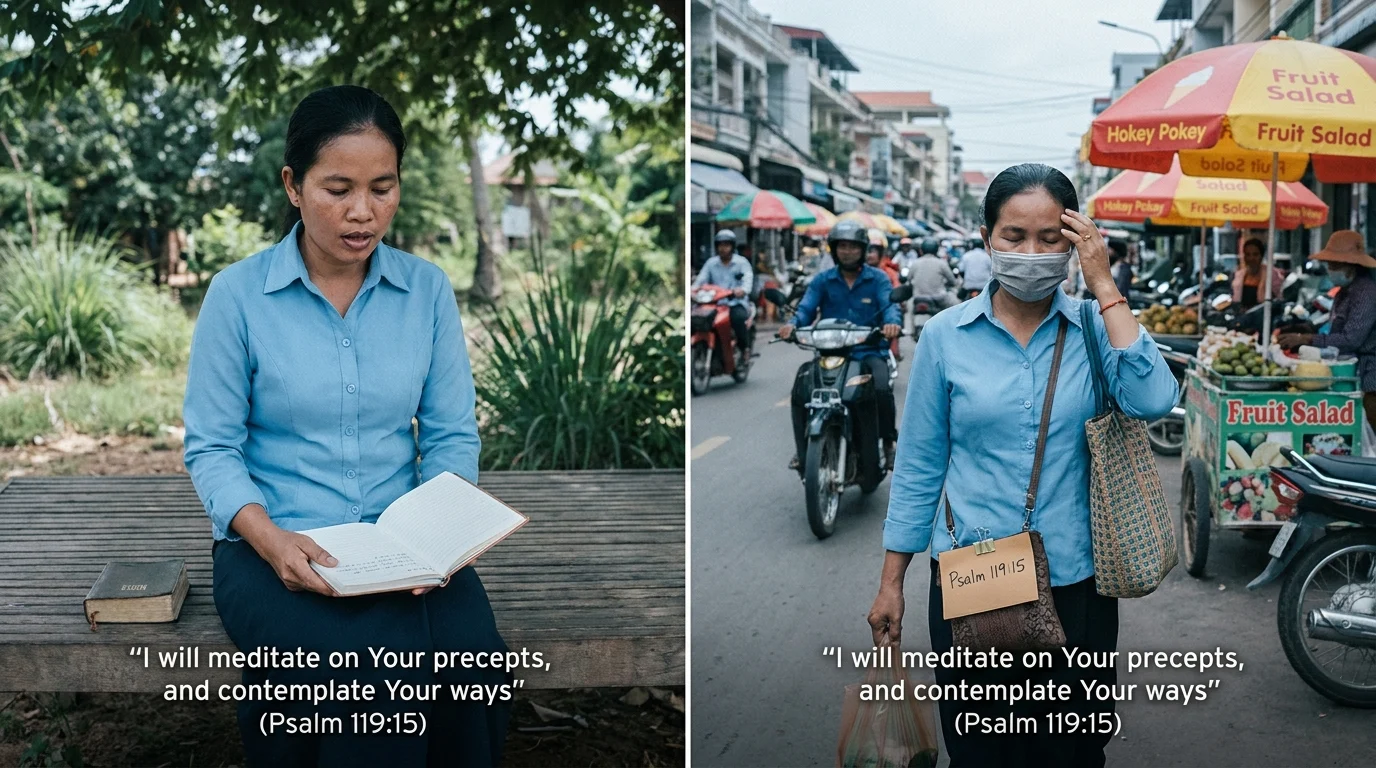
David’s pattern was not reserved for a shepherd king with hours of quiet in the fields. You can build the same rhythm into an ordinary week, even a busy one.
Read One Verse Slowly
Do not rush through a chapter to check a box. Choose one verse and read it several times, out loud if you can. Ask what it says about God, about you, and about how you should live today.
Memorize a Short Passage
Pick a verse you can carry with you. The psalmist wrote, “I will meditate on Your precepts, and contemplate Your ways” (Psalm 119:15). You cannot contemplate what you have not first stored in your memory.
Return to It Through the Day
Bring the verse to mind while you walk to market, while you cook, while you wait for a bus. This is the “day and night” habit David described, small returns spread across ordinary hours rather than one long session.
Let Reflection Turn into Prayer
Do not stop at understanding. Speak back to God what the verse has shown you. Ask Him to plant its truth deep enough that it shapes how you respond the next time you are tested.
Key Takeaways
Meditating on Scripture is not an eastern practice of emptying your mind. It is filling your mind, deliberately and repeatedly, with the words God has already spoken.
David delighted in God’s law, planted himself beside it, and waited for fruit that came in its season. You can walk the same path: read slowly, memorize, repeat, and pray. Roots grow in the quiet, and the harvest follows in time.
There is more to read at Unbounded Knowledge. Come back often.
If you have questions about Christ, or you want to talk about your own faith journey, reach out to Naleng Real at nalengreal.com. She will be glad to hear from you.