
You bow your head. You close your eyes. And then… you wonder if anyone is actually listening.
This doubt is not new. Every believer has felt it. You speak words into silence and wait. Sometimes nothing seems to happen. You wonder if your prayers are too small, too frequent, too selfish, or too ordinary. You wonder if God is busy with bigger problems in bigger places.
He is not too busy. He is listening. And He has always been listening.
Prayer is one of the most basic and most misunderstood practices in the Christian life. Many believers treat it like a vending machine: insert the right words, receive the desired result. Others treat it like a religious duty, a box to check before meals and bed. But Scripture describes something far more personal. Prayer is a conversation with the living God. It is a child speaking to a Father who knows every word before it leaves your lips and loves you anyway.
What Prayer Actually Is
Jesus did not leave prayer as a mystery. When His disciples asked Him to teach them to pray, He gave them a model. We call it the Lord's Prayer.
Our Father in heaven, hallowed be Your name. Your kingdom come. Your will be done on earth as it is in heaven. Give us this day our daily bread. And forgive us our debts, as we forgive our debtors. And do not lead us into temptation, but deliver us from the evil one. For Yours is the kingdom and the power and the glory forever. Amen. , Matthew 6:9-13, NKJV
Look at how the prayer begins: Our Father in heaven.
Not Almighty Judge. Not Distant Creator. Father. This one word changes everything about how you approach God. You are not presenting a legal case. You are coming home. You are speaking to a Father who is good, who is present, and who already knows what you need before you ask.
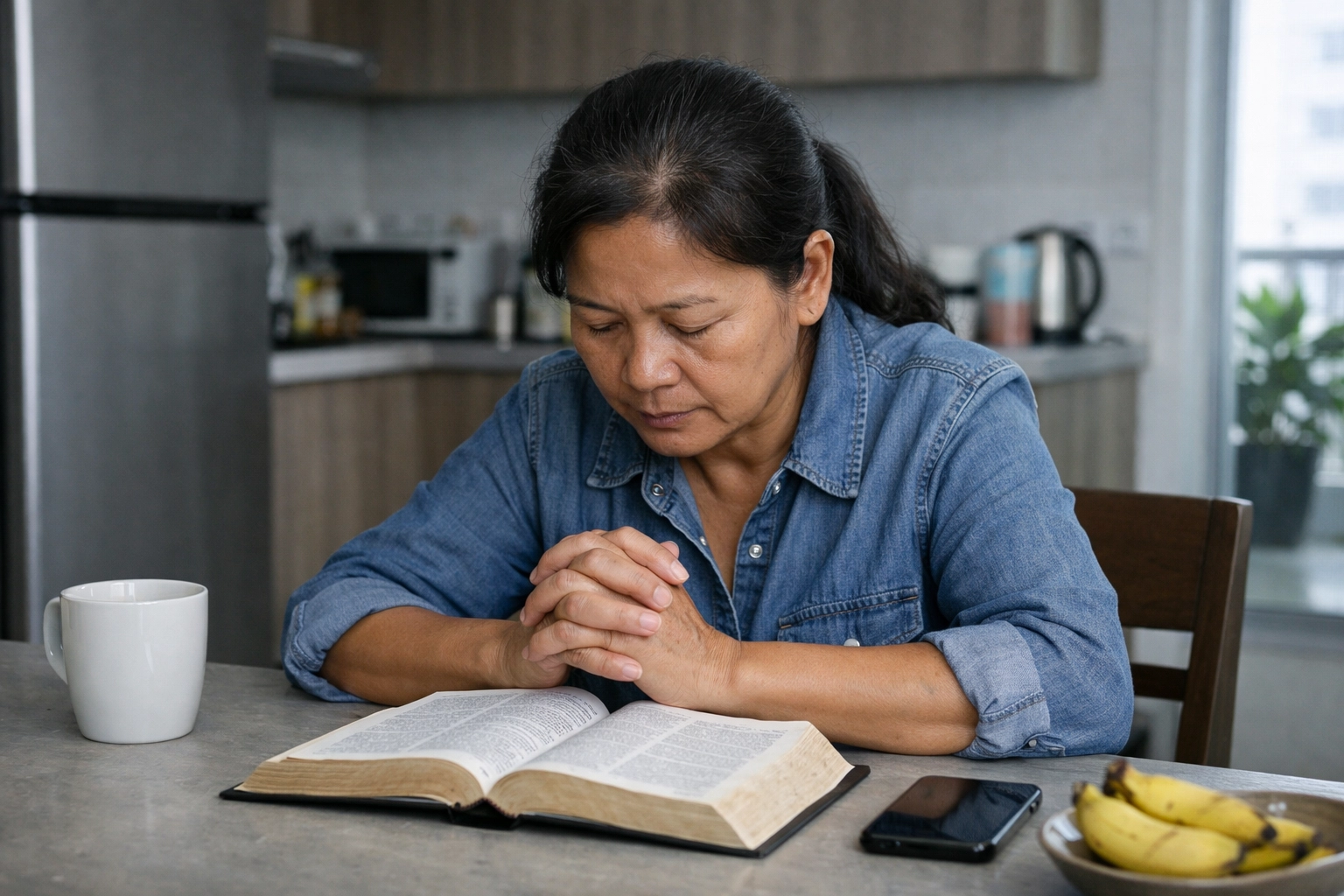
The prayer covers six things: worship, submission, daily needs, forgiveness, temptation, and God's glory. It is comprehensive without being complicated. Jesus showed His disciples that prayer is not primarily about persuading God to do what you want. It is about aligning yourself with what God is already doing.
Charles Spurgeon, the 19th-century British preacher known as the Prince of Preachers, wrote:
Visit many good books, but live in the Bible.
He understood that prayer and Scripture belong together. You cannot pray with power if you do not know the God you are praying to. The Word shapes your prayers. Your prayers bring the Word to life. Knowing how to hear His voice is part of this journey, as explored in our guide on discernment.
The Peace That Passes Understanding
Most people come to prayer when they are anxious. A hospital visit. A financial crisis. A relationship that feels like it is falling apart. The Apostle Paul wrote directly to this moment.
Be anxious for nothing, but in everything by prayer and supplication, with thanksgiving, let your requests be made known to God, and the peace of God, which surpasses all understanding, will guard your hearts and minds through Christ Jesus. , Philippians 4:6-7, NKJV
Notice three things Paul says. First, be anxious for nothing. Not some things. Nothing. Second, bring everything to God in prayer, with thanksgiving. Third, receive a peace that surpasses all understanding.
That phrase is striking. Paul does not promise that God will immediately resolve every problem. He promises peace that goes beyond your ability to reason your way to it. This is peace that arrives even when circumstances have not changed. It is a peace that guards your heart and mind like a soldier standing watch.
A.W. Tozer, the 20th-century American pastor and author of The Pursuit of God, wrote:
What comes into our minds when we think about God is the most important thing about us.
If you believe God is distant and indifferent, your prayers will feel like shouting into the dark. But if you believe He is present and attentive, your prayers become a resting place.
Pray Without Ceasing
One of the most challenging commands in Scripture is also one of the shortest.
Pray without ceasing. , 1 Thessalonians 5:17, NKJV
How is this possible? You have work, family, responsibilities. You cannot be on your knees all day.
Paul is not describing a posture. He is describing an orientation. A life of prayer is one where you stay in constant awareness of God's presence throughout the day. You speak to Him in the morning before others wake. You whisper a prayer of thanks when something good happens. You pause for thirty seconds before a hard meeting and ask for wisdom. You end the day by releasing what you could not control.
Think of it like a friendship. You do not spend every hour of every day in formal conversation with a close friend. But a deep friendship means that person is with you throughout your day. You see something and think, I need to tell them about this. Prayer without ceasing is that kind of living awareness of God.

A Grandmother Prays Before Dawn
In Cambodia, before the city wakes and before the streets fill with noise, some grandmothers rise early. They light a candle, find a quiet corner, and begin to pray.
One grandmother does this for her sick grandchild. The child has been feverish for two days. The family has little money. The doctor's words were not encouraging. And so the grandmother kneels and speaks directly to God, quietly, persistently, asking for healing and mercy.
She does not use elaborate words. She does not perform a ritual for others to see. She speaks like someone who has known God for decades and trusts Him fully. She holds the child's name before the Father like an offering.
This is exactly what James described:
Confess your trespasses to one another, and pray for one another, that you may be healed. The effective, fervent prayer of a righteous man avails much. , James 5:16, NKJV
The word fervent here carries the idea of energetic, earnest, persistent prayer. James is describing prayer that comes from a deep place, not a hurried or mechanical place. The grandmother praying before dawn is praying like this. She is not performing. She is pleading with a Father she knows.
John Wesley, the 18th-century preacher and founder of Methodism, understood prayer as inseparable from a life of holiness and service. He wrote:
Do all the good you can, by all the means you can, in all the ways you can, in all the places you can, at all the times you can, to all the people you can, as long as ever you can.
Wesley's life made it clear that persistent prayer and persistent action belong together. He prayed with that same tenacity. And God used him to bring revival across England and beyond.
Why Prayer Feels Hard
Let us be honest about the struggles.
Some days prayer feels dry and empty. You speak and feel nothing. You bring a request and weeks pass with no obvious answer. You watch other believers speak about prayer with excitement, and you feel guilty for not feeling the same.
This is normal. It is not evidence that God has abandoned you.
C.S. Lewis, the 20th-century British author of Mere Christianity, wrote:
I believe in Christianity as I believe that the Sun has risen: not only because I see it, but because by it I see everything else.
Faith does not depend on feeling. Prayer does not require a warm emotional experience to be real or effective. You pray because God is real, not because prayer always feels good.
Dry seasons in prayer are often seasons of growth. They press you past emotional dependency into genuine trust. They teach you to pray from conviction rather than feeling. And often, when you look back, you see that God was present and working even when you felt nothing.
Live It Today
Prayer is not a skill reserved for pastors or theologians. It is a conversation available to every believer, right now, exactly as you are.
Begin With Five Minutes Each Morning
Before you check your phone or speak to anyone else, give five minutes to God. Use the Lord's Prayer as a guide. Worship Him. Ask for what you need. Forgive those who have wronged you. These five minutes orient your whole day.
Bring Your Anxiety to God Specifically
When you feel worried, do not let the anxiety sit. Name it before God. I am afraid about this situation. I am anxious about this person. I do not know what to do. Philippians 4:6-7 promises that when you bring specific requests with thanksgiving, peace will come.
Pray For Someone Else This Week
James 5:16 calls you to pray for one another. Choose one person this week, someone who is sick, struggling, or grieving. Pray for them by name, daily, for seven days. Tell them you are praying for them. Watch what God does.
Keep a Simple Prayer Record
Write down what you pray for and when you see God's answers. This is not a spiritual achievement system. It is a record of faithfulness, yours and God's. Over time, it will strengthen your confidence that He hears and He answers.
The Father Is Listening
Prayer is not a technique. It is a relationship. You come to a Father who already loves you, who already knows your name, and who already holds your future in His hands. You do not pray to earn His attention. You pray because you already have it.
Bring your doubts. Bring your grief. Bring your requests and your thanks and your confusion. Bring all of it. He is not overwhelmed by what you carry. He invites it.
Come to Me , Matthew 11:28
Jesus said this, and that invitation stands today.
If you want to explore your faith further or have questions about beginning a relationship with Christ, reach out to Naleng Real at https://nalengreal.com. Naleng will be glad to walk with you.
View more at https://unboundedknowledge.org/our-blog/