

Most people treat prayer like an emergency button. They press it when things fall apart. But God calls you to something far deeper than that.
“Pray without ceasing.”, 1 Thessalonians 5:17, NKJV
Three words. One of the shortest commands in the entire New Testament. And one of the hardest to understand.
How can anyone pray without stopping? You have work. You have family. You sleep. Life demands your attention every hour. So what does it mean to pray without ceasing? And why does it matter for you, right now, in your daily life?
This is Day 7 of our 30 Days of Prayer. Today we go deeper into what continual prayer actually looks like, not as a religious performance, but as a living conversation with God that runs through everything you do.
What Continual Prayer Actually Means

Paul does not tell you to kneel for 24 hours a day. He is not commanding you to stop working or close your eyes all day. What he is describing is an orientation, a constant turning of the heart toward God.
The original Greek word behind “without ceasing” is adialeiptos. It means uninterrupted, but it also carried the sense of a persistent cough or a recurring rhythm, something that keeps returning. The picture is not a man frozen in one position. The picture is a man whose heart keeps returning to God, again and again, no matter what he is doing.
Paul says it again in Romans 12:12: “…continuing steadfastly in prayer” (NKJV). The word “steadfastly” matters. It speaks of determination. You do not drift away and stay away. You come back. You return.
This is not about perfect focus. It is about faithful return.
The Weaver at the Loom
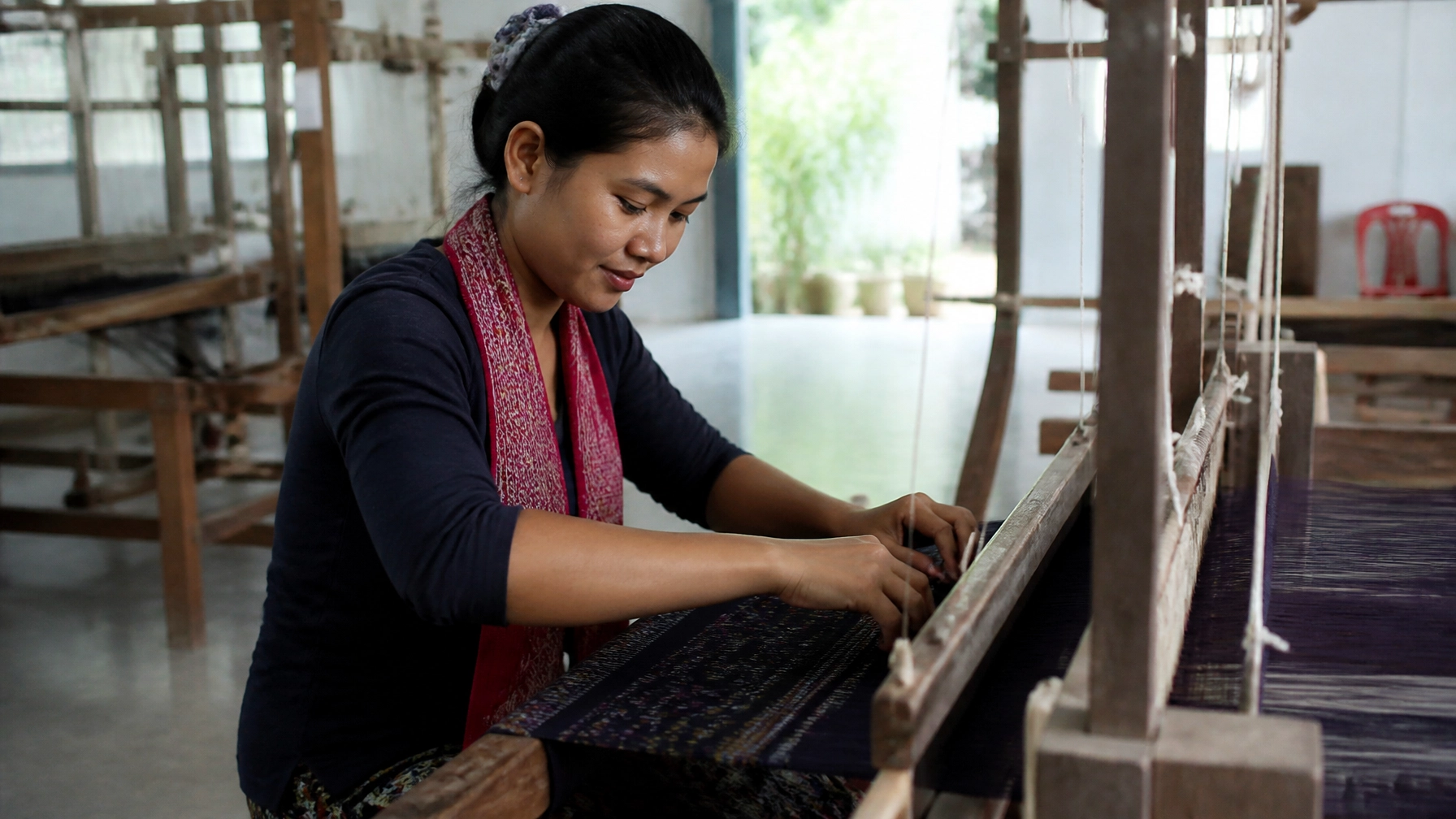
In Cambodia, a skilled weaver works at the loom for hours. Her hands move in a steady rhythm, pull, pass, beat. Pull, pass, beat. She does not stop to think about each motion. The pattern is part of her. The work has become second nature.
But she is not absent-minded. She is alert. She watches the threads. She notices when something is wrong. She corrects it immediately and keeps going.
Continual prayer works the same way. Throughout your day, your heart keeps returning to God, in gratitude when something goes right, in trust when something goes wrong, in a quiet word during a brief moment of stillness. You are not performing a ceremony. You are staying connected.
The loom does not stop just because the light changes or the day grows long. The weaver’s rhythm continues. That is the picture of a life shaped by continual prayer.
Praying in Every Season, Not Just Crisis
Jesus told His disciples a parable for exactly this purpose. Luke 18:1 records it clearly:
“Then He spoke a parable to them, that men always ought to pray and not lose heart.”, Luke 18:1, NKJV
Notice the goal: do not lose heart. Jesus knew that His followers would face discouragement. They would pray and not see immediate answers. They would grow tired. He gave them this parable not as a theological lecture, but as practical help. Keep praying. Do not give up.
The woman in the parable kept returning to the judge. She did not go once and walk away. She came back. And her persistence moved even an unjust judge to act. How much more will your persistence in prayer move a Father who loves you?
A.W. Tozer, the 20th-century pastor and writer who spent decades calling Christians to deeper devotion, understood this well. He wrote: “The man who would know God must give time to Him. He must be willing to withdraw from the noise of the world and wait before Him.” Continual prayer is not loud or dramatic. It is steady and deliberate.
Praying in the Spirit With All Perseverance
Paul gives the clearest picture of continual prayer in Ephesians 6:18:
“…praying always with all prayer and supplication in the Spirit, being watchful to this end with all perseverance and supplication for all the saints.”, Ephesians 6:18, NKJV
Four things stand out in this verse.
All prayer. Not one kind. Not only formal prayer. Every kind, spoken, whispered, silent. In grief and in joy. In ordinary moments and extraordinary ones.
In the Spirit. Continual prayer is not your effort alone. The Holy Spirit helps you. Romans 8:26 tells you that He intercedes for you when you do not know how to pray. You are not praying in your own strength.
Watchful. Prayer keeps your eyes open. You start to notice what God is doing around you. You become alert to the needs of others.
Perseverance. You keep going. Not because the feeling is always strong, but because the command is clear. John Wesley, whose preaching sparked revival across England in the 18th century, reportedly said he had so much to accomplish in a day that he could not do it on fewer than three hours of prayer. His life showed what perseverance in prayer produces: a church renewed, the poor served, whole communities changed.

When Prayer Feels Like Nothing
There will be days when continual prayer feels empty. Your words feel thin. Your mind wanders. You wonder if anyone is listening.
This is normal. It is not failure.
John Bunyan, the Puritan writer who composed Pilgrim’s Progress while imprisoned for his faith, knew what it meant to keep praying when life was hard. He wrote: “Prayer will make a man cease from sin, or sin will entice a man to cease from prayer.” His life proved the point. Even in prison, he kept praying. And his prayers, his writing, and his faith have shaped the lives of millions.
Do not let silence from heaven stop you from speaking. Do not let distraction convince you that God is not present. Return to Him. Again. And again.
That is what “without ceasing” means. Not perfect focus, but faithful return.
Prayer That Covers Others
One thing that makes continual prayer powerful is that it extends beyond yourself. Paul specifically asks for prayer “for all the saints.” Continual prayer is not only personal, it carries others before God throughout your day.
Think of someone in your life who is struggling right now. A friend facing illness. A family member who does not yet know Christ. A neighbor in financial difficulty. Continual prayer means their names come before God not only in your morning devotion, but throughout the day, whenever they cross your mind.
Those moments are not interruptions. They are invitations. Every time someone comes to mind, let it become a brief prayer. “Lord, be with them. Help them. Draw them to yourself.”
Charles Spurgeon, the 19th-century preacher whose sermons are still read around the world, said: “Prayer is the slender nerve that moves the muscles of omnipotence.” Your prayers for others are not small. They move the hand of God.
Live It Today
Start With a Morning Anchor
Before you begin your day, spend three to five minutes in prayer. This is not the only time you will pray today, it is the anchor that holds the rest in place. Tell God you want to stay connected to Him throughout the day. Ask the Holy Spirit to help you.
Return Throughout the Day
Set a simple habit. Three times during your day, morning, midday, evening, pause for sixty seconds. Even if you are working. Even if you are tired. Breathe. Speak briefly to God. Thank Him for one thing. Ask Him for one thing. That is enough.
Pray When Others Come to Mind
When someone’s name comes to mind today, do not let it pass. Pray for them right then. One sentence is fine. “Lord, be with _____. He needs Your help.” This is how continual prayer grows into intercession.
End With a Closing Word
Before you sleep, speak to God again. Not a long performance. Just a few honest sentences. What happened today? What are you grateful for? What are you worried about? Leave it with Him. Let the last conversation of your day be with your Father.

Keep Going
You are seven days into 30 days of prayer. This is not the time to slow down. You are building something real. A rhythm. A habit. A relationship.
The weaver’s hands do not stop because the day is long. The pattern grows stronger with every hour she works. Your prayer life grows stronger the same way.
Pray without ceasing. Return when you drift. Trust that He hears every word.
If you want to talk more about prayer, faith, or what it means to follow Christ, reach out to Naleng Real at https://nalengreal.com. She would be glad to walk with you.
Keep praying.
